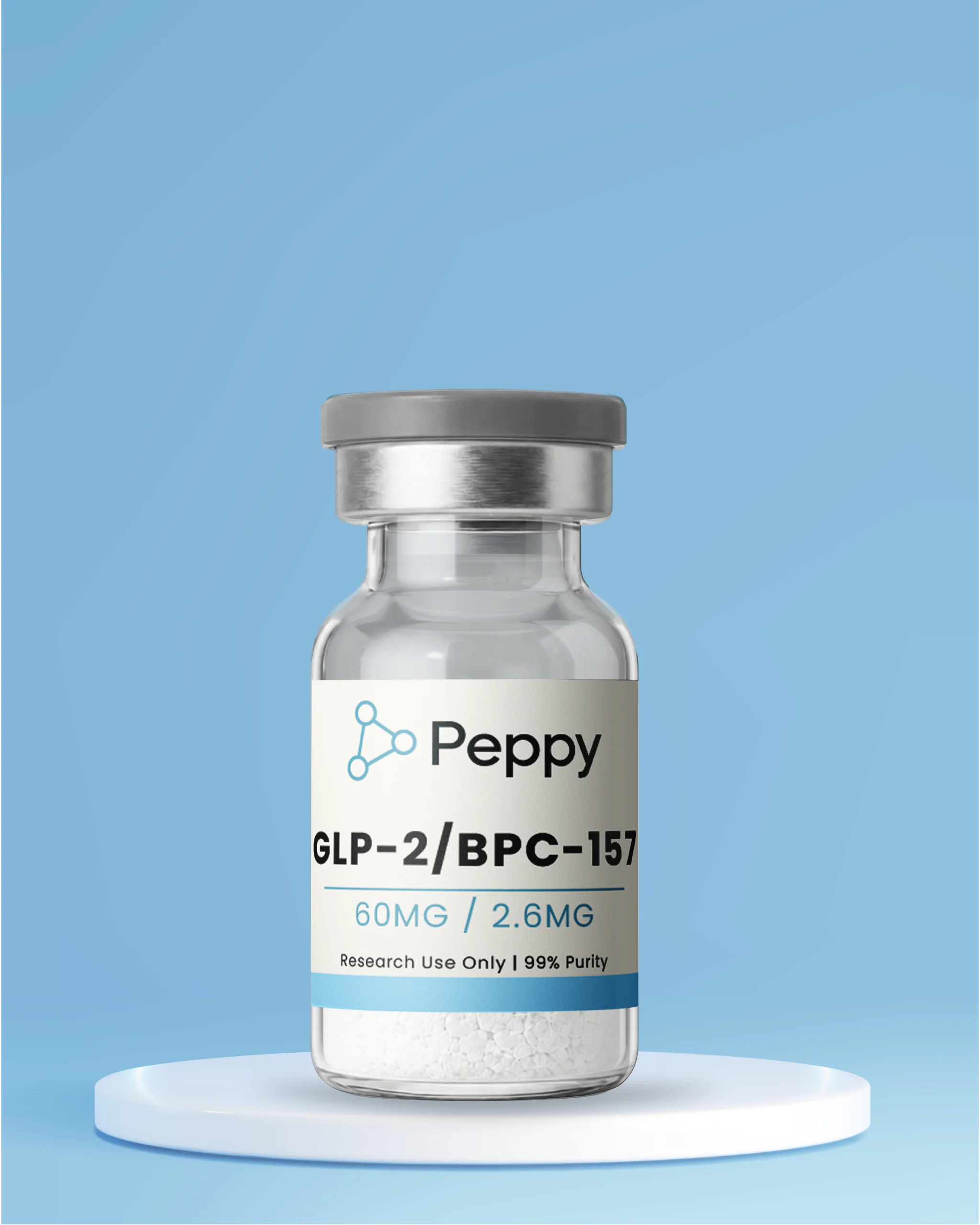
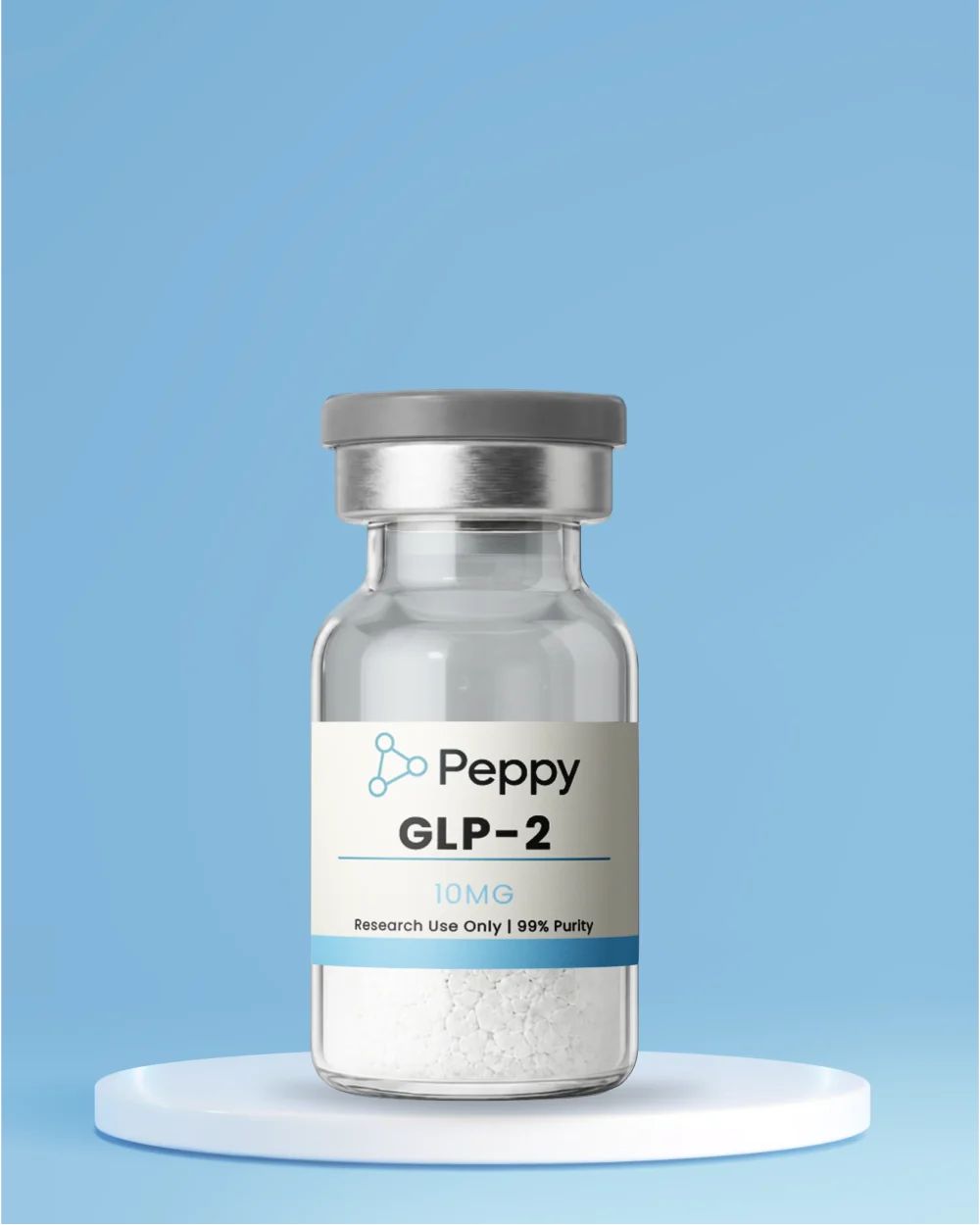
GLP-2 / BPC-157 is a two-compound research blend supplied by Peppy Peptides for laboratory research use only. With this blend, laboratories can examine two distinct peptide-signaling systems in a single formulation.
What is GLP-2 / BPC-157?
The blend combines two peptides. The first is GLP-2, a synthetic dual GIP/GLP-1 receptor agonist. The second is BPC-157, a gastric-derived peptide fragment that appears in peptide-signaling literature.
GLP-2 / BPC-157 is studied for interaction with GIP and GLP-1 receptor signaling and with pathways associated with peptide-signaling in laboratory models. Researchers working with the blend in vitro and in preclinical models examine:
- comparative receptor engagement
- cross-pathway signal transduction
- how the combined peptides behave compared with each compound studied individually
Research Applications
GLP-2 / BPC-157 is suited to combination-peptide study designs, in which researchers examine a dual GIP/GLP-1 receptor agonist alongside a second peptide within the same experimental design. This supports assays that require concurrent exposure to both compounds.
The blend is also relevant to peptide-interaction modeling, formulation-stability research on multi-peptide research products, and assay-validation work comparing blended and single-compound protocols. Cell-biology, biochemistry and comparative-signaling laboratories may study it as part of multi-pathway characterization.
Frequently Asked Questions
What is GLP-2 / BPC-157?
GLP-2 / BPC-157 is a two-compound research blend studied for interaction with GIP and GLP-1 receptor signaling and with peptide-signaling pathways in laboratory models.
Why study the two peptides as a blend?
A single formulation lets researchers examine both signaling systems concurrently and compare blended protocols with single-compound protocols.
Published laboratory research on GLP-2 and BPC-157 is indexed on PubMed.