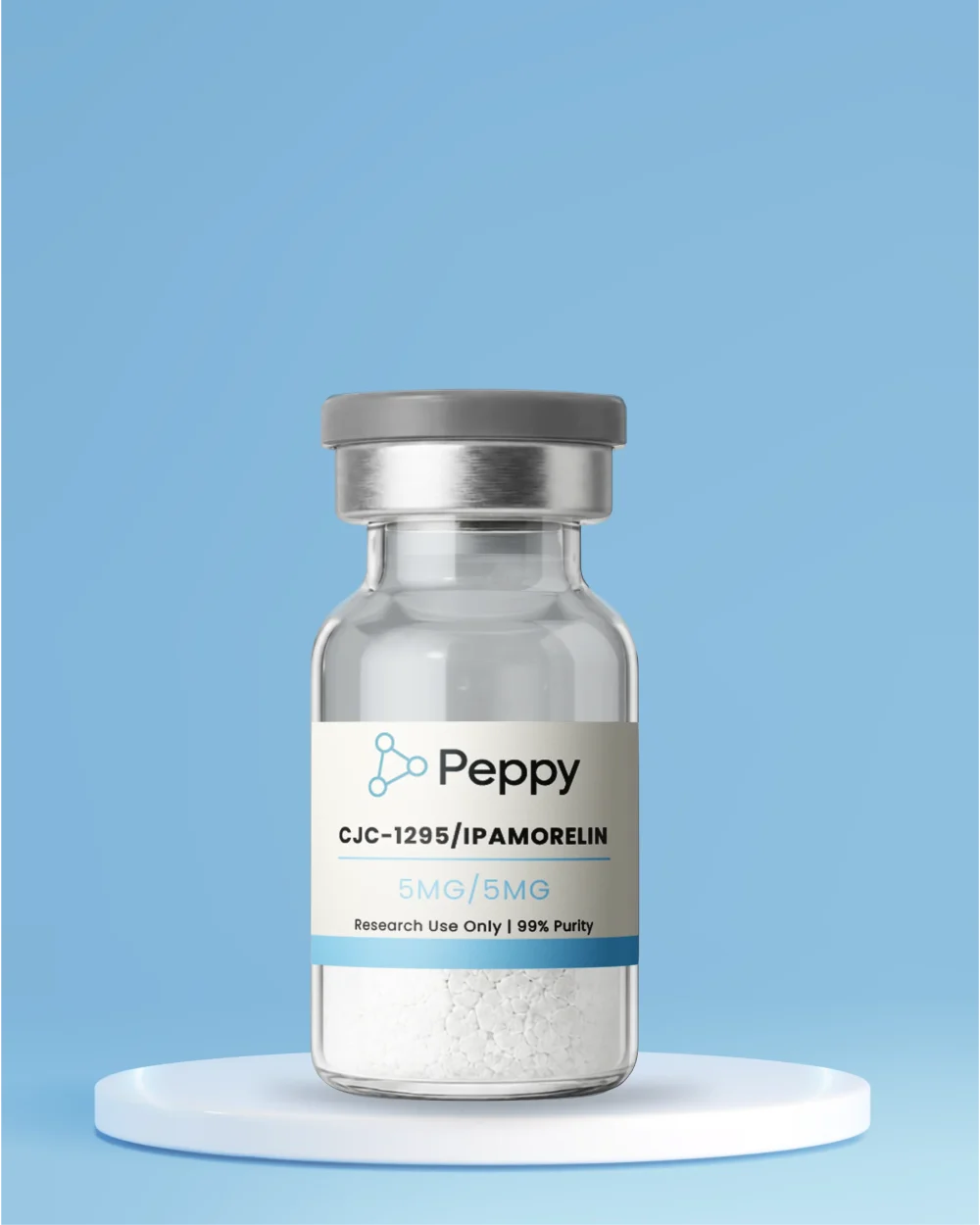
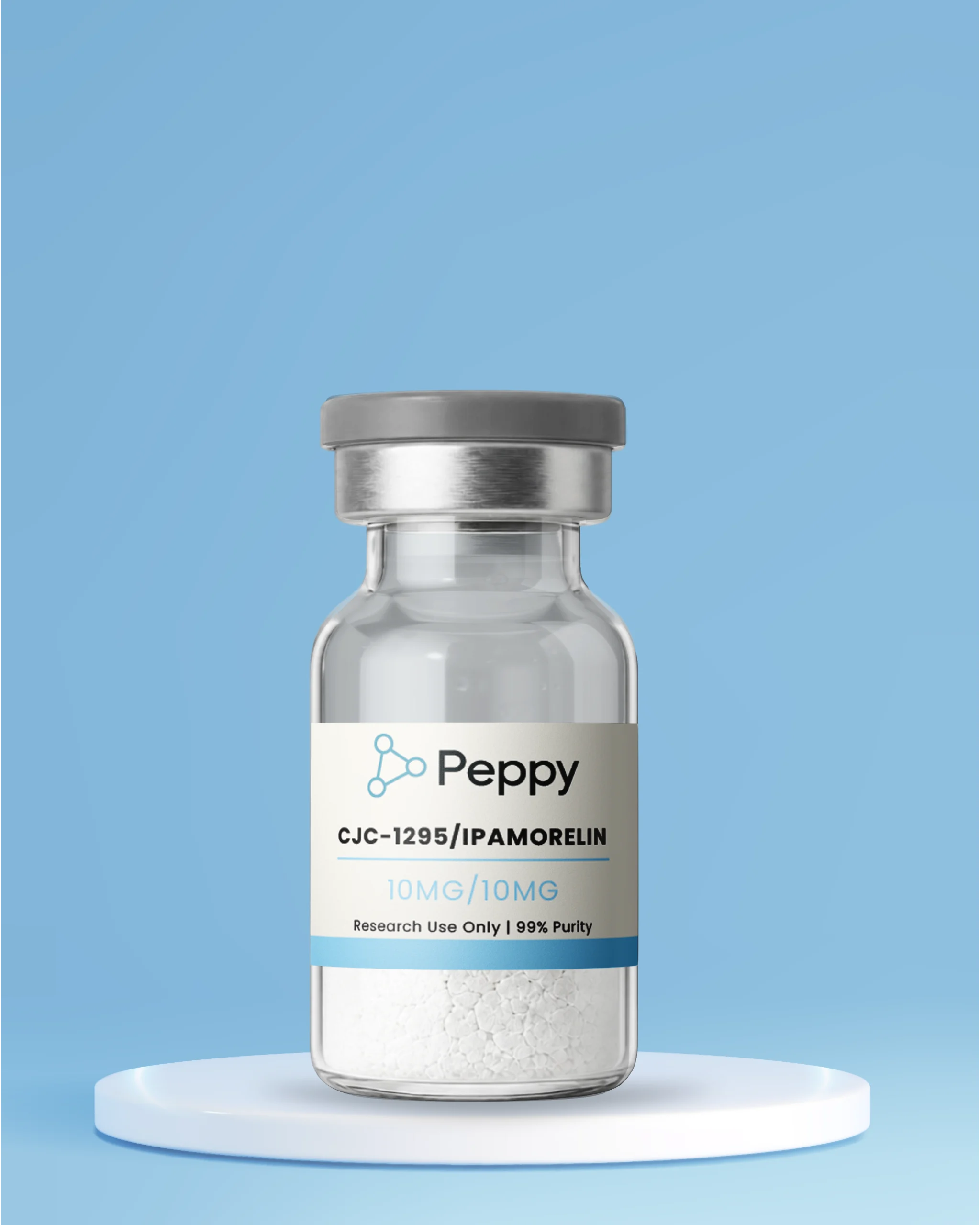
CJC-1295 / Ipamorelin - 10mg / 10mgCurrent
Lot CJCP072026-MG
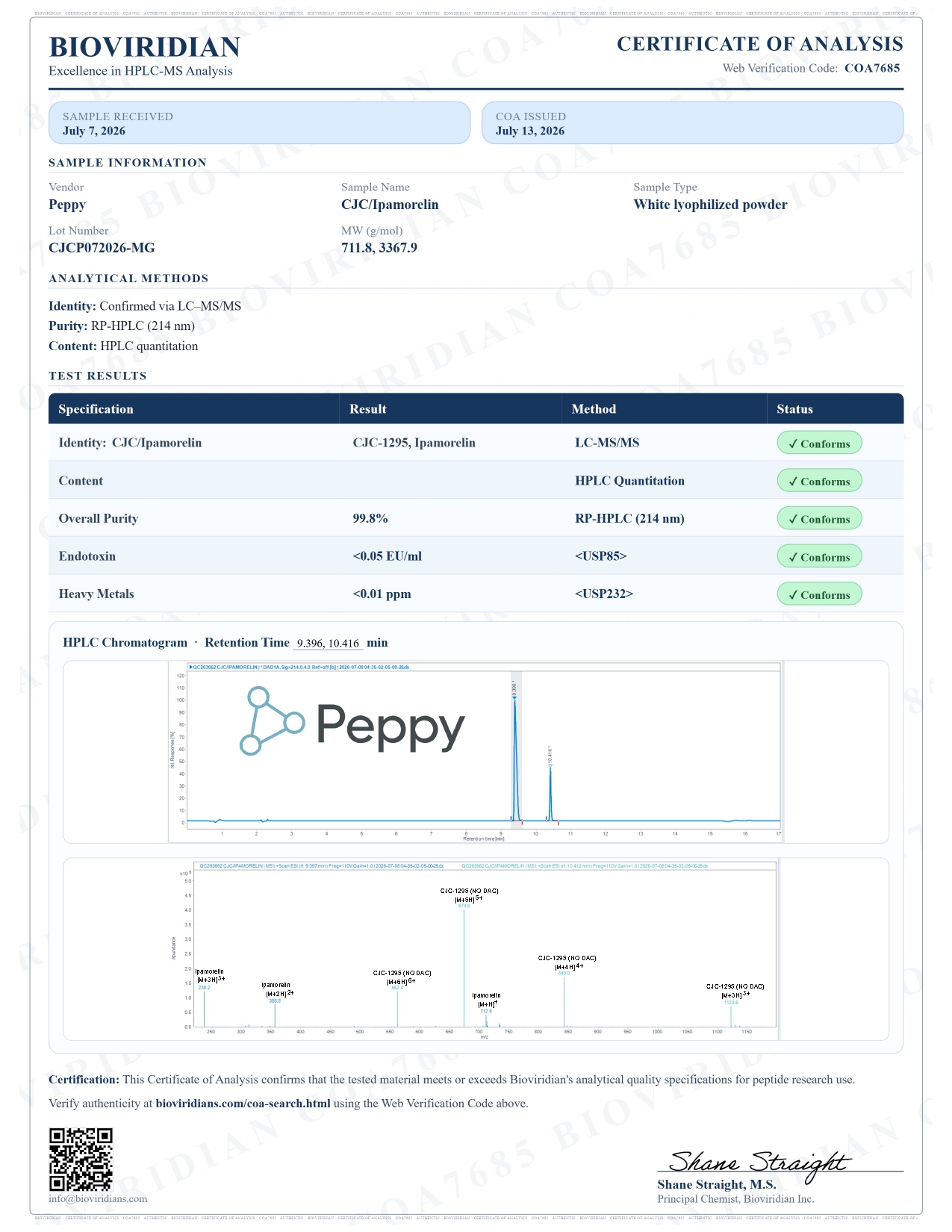
99.8%
Overall purity
Tested July 13, 2026
Open COAFOR LABORATORY RESEARCH PURPOSES ONLY. This compound has not received FDA approval. All information shown is drawn from published laboratory research for educational purposes
$175.00
Lost, stolen, or damaged? We replace it, on us.
Pick your speed at checkout.





Before you continue
This site sells research products exclusively to qualified researchers and laboratories for in vitro and laboratory use. Please confirm before continuing.
CJC-1295 / Ipamorelin (10mg / 10mg) is a two-compound research formulation that pairs a growth-hormone-releasing hormone (GHRH) analogue with a selective growth-hormone secretagogue. It is supplied for laboratory research use only. The combination is frequently referenced in endocrinology research on growth-hormone-axis signaling.
CJC-1295 is a modified GHRH analogue studied for its interaction with the growth-hormone-releasing hormone receptor. Ipamorelin is a selective ghrelin-receptor agonist studied in growth-hormone secretagogue signaling research.
In the laboratory, CJC-1295 / Ipamorelin is used to examine how the two receptor pathways interact across the growth-hormone axis, including pituitary somatotroph signaling and downstream IGF-1 pathway activity in cell-culture and animal-model systems.
This combination is referenced in laboratory research on pulsatile growth-hormone-secretion signaling, pituitary receptor pathways, and downstream metabolic and lipid-signaling pathways. Investigators studying the somatotropic axis use CJC-1295 and Ipamorelin as reference compounds that allow GHRH-receptor and ghrelin-receptor pathway activity to be studied separately, which supports pathway-specific research designs.
Related research also examines cellular signaling associated with IGF-1 pathway activation in in vitro and rodent-model studies. This literature is confined to controlled laboratory research.
They act on two different receptors in the growth-hormone axis: the GHRH receptor (CJC-1295) and the ghrelin receptor (Ipamorelin). Studying them together lets researchers compare how the two pathways interact.
Ipamorelin is studied as a selective agonist of the ghrelin receptor, also known as the growth-hormone secretagogue receptor.
Published laboratory research on CJC-1295 and Ipamorelin is indexed on PubMed.
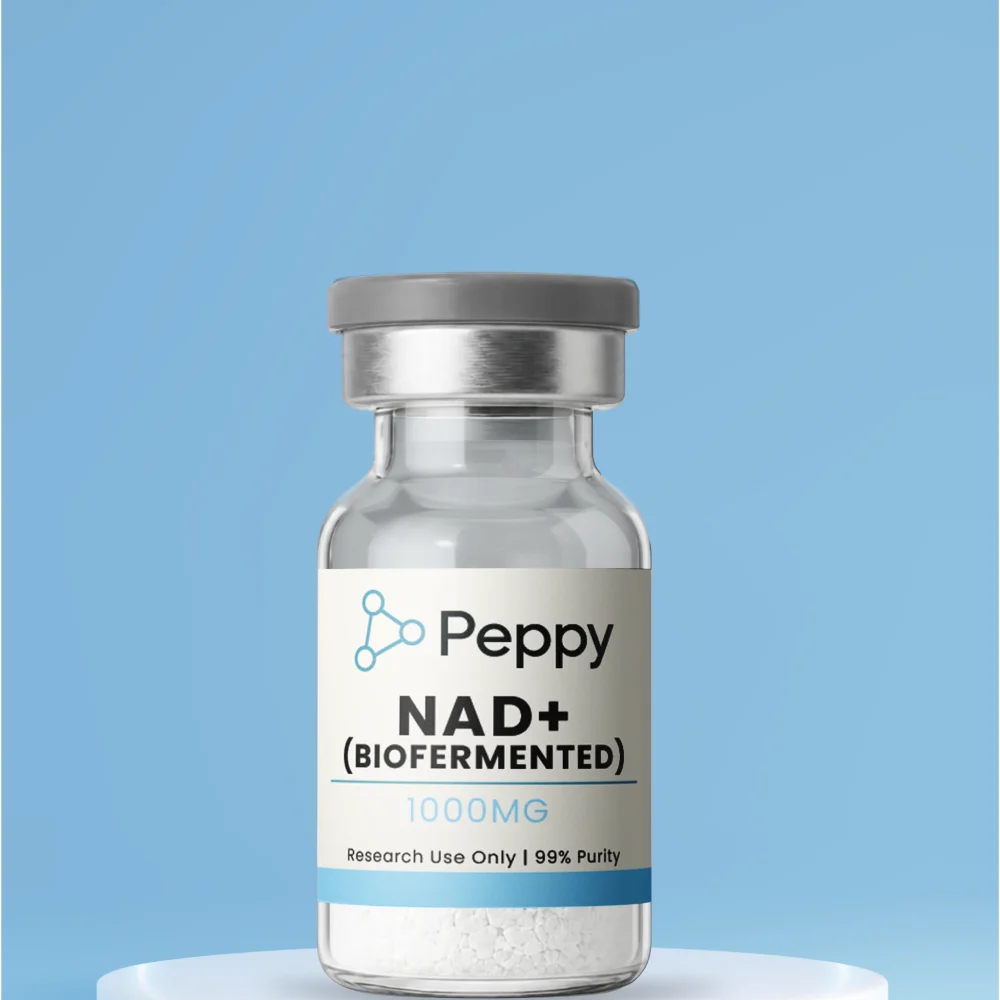
Related Research Compounds: NAD+ -1000mg • BPC Wolverine + KPV – 10mg / 10mg / 10mg • Browse all Best Sellers research compounds
For research use only. Not for human consumption. Not evaluated by the FDA. Not intended to diagnose, treat, cure, or prevent any disease. This compound has not received FDA approval. All information shown is drawn from clinical studies for educational purposes.
Researcher favourites
Price range: $125.00 through $175.00
Price range: $150.00 through $650.00
Price range: $125.00 through $700.00
$150.00
$175.00
Lab-verified quality
Each lot is analysed by Bioviridian before release. Below is the Certificate of Analysis for the most recent lot, as issued by the laboratory.
Overall purity
99.8%
RP-HPLC (214 nm)
View the signed COA (PDF)Check this certificate at bioviridians.com/coa-search.html with code COA7685.
Test results
5 of 5 conformHPLC retention time 9.396, 10.416 min · Signed: Shane Straight, M.S., Principal Chemist, Bioviridian Inc.
Every lot keeps its own signed certificate. Lots are listed newest first.
Lot CJCP072026-MG
99.8%
Overall purity
Tested July 13, 2026
Open COAEarlier lots will appear here as new Certificates of Analysis are published.
Compound details
Molecular profile
Storage requirements
Store lyophilized compound at −20°C for long-term stability.
Refrigerate at 2–8°C after reconstitution and use within 4–6 weeks.
Published literature
7 peer-reviewed publications indexed on PubMed. Listed for reference only; inclusion does not imply any use, effect or endorsement.
J PHARM PHARMACOL · 1995 CJC-1295
Bai JP, Chang LL J Pharm Pharmacol. 1995;47(8):698-701. doi:10.1111/j.2042-7158.1995.tb05863.x
Characterised the enzymatic degradation of GRF(1-29)NH2 by intestinal brush-border preparations and the contribution of dipeptidyl peptidase IV cleavage at the N-terminus.
ENDOCRINOLOGY · 2005 CJC-1295
Jetté L, Léger R, Thibaudeau K, et al. Endocrinology. 2005;146(7):3052-3058. doi:10.1210/en.2004-1286
Described the design of tetra-substituted hGRF(1-29) analogues and their albumin bioconjugates, and characterized GRF-receptor activation and duration of action in rat pituitary cells and rats (note: the lead compound, CJC-1295, carries the DAC linker).
VITAM HORM · 2000 CJC-1295
Structure and function of the growth-hormone-releasing hormone receptor
Petersenn S, Schulte HM Vitam Horm. 2000;59:35-69. doi:10.1016/s0083-6729(00)59003-7
Reviewed the molecular structure, ligand binding and signal transduction of the GHRH receptor, the target of GRF(1-29) analogues.
EUR J ENDOCRINOL · 1998 Ipamorelin
Ipamorelin, the first selective growth hormone secretagogue
Raun K, Hansen BS, Johansen NL, et al. Eur J Endocrinol. 1998;139(5):552-561. doi:10.1530/eje.0.1390552
Characterised the growth hormone-releasing potency and selectivity (versus ACTH and cortisol release) of the pentapeptide ipamorelin in rat pituitary cells and in rats and swine.
GROWTH HORM IGF RES · 1999 Ipamorelin
Ipamorelin, a new growth-hormone-releasing peptide, induces longitudinal bone growth in rats
Johansen PB, Nowak J, Skjaerbaek C, et al. Growth Horm IGF Res. 1999;9(2):106-113. doi:10.1054/ghir.1999.9998
Measured longitudinal bone growth and body-weight parameters in adult female rats given ipamorelin, compared with growth hormone administration.
FRONT NEUROENDOCRINOL · 1998 Ipamorelin
Growth hormone-releasing peptides and their analogs
Camanni F, Ghigo E, Arvat E Front Neuroendocrinol. 1998;19(1):47-72. doi:10.1006/frne.1997.0158
Reviewed the chemistry, receptor pharmacology and endocrine activity of synthetic growth hormone-releasing peptides and their non-peptide analogues.
PHARM RES · 1999 Ipamorelin
Gobburu JV, Agersø H, Jusko WJ, et al. Pharm Res. 1999;16(9):1412-1416. doi:10.1023/a:1018955126402
Developed a pharmacokinetic-pharmacodynamic model relating plasma ipamorelin concentrations to growth hormone release in a characterisation study in healthy volunteers.